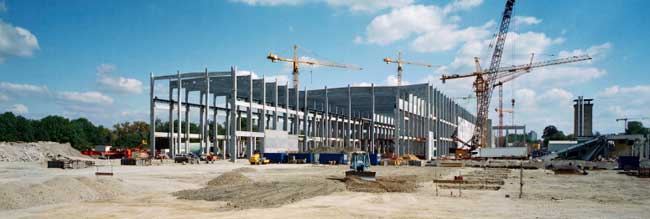
If architects conceive structural integrity, construction contractors are the ones who assemble it. The customer-builder relationship is shaped by three competing pressures: quality workmanship, schedule, and budget.
The Clock
If time is money, that is especially true on a construction site. When the clock starts, all stakeholders keep one eye on the schedule. Projects are often judged by whether they finish on time, and any backlog produces client pressure.
 Clients and builders want quality workmanship delivered on time, but the industry applies unrealistic pressure to building times. One can see it both ways. Any delay results in cost pressures. On the other hand, poor installation quality delays the project too, which creates its own friction with the client. Everyone benefits from understanding how time shapes construction objectives. Yet many stakeholders do not appreciate how much moisture levels matter when a schedule is being set.
Quality Content
Installation success rests on quality workmanship. Once poured, concrete needs to cure; once installed, wood needs to bond with its subfloor. Both materials contain moisture, and those levels need to stabilize. No amount of client pressure changes the fact that installers must leave enough time to do the work properly. Moisture control is central to that.
Moisture has a surprisingly profound influence on how a floor performs, and getting it right matters for both wood and concrete. Those levels are largely determined by the relative humidity (RH) surrounding the materials, so they shift as RH changes. Moisture content is not something to fear. It is something to manage.
 If budget is paramount, clients who put the schedule ahead of moisture levels could pay $20 to $50 per square foot of professional neglect. Costs run over when concrete is too wet to proceed, or when wood adhesives break down. Builders who succumb to impatience actually extend the overall project. Or they face the unenviable task of telling the bosses that an installation has failed. Impatience creates a nightmare scenario for contractors, project managers, and clients.
The Read on Installation
Monitoring moisture lets installers deliver quality on time, without the friction. Builders install as directed, and they measure moisture levels with meters. Contractors can accurately monitor RH in the concrete as the slab dries, which is critical for identifying when a finished floor product can go down. Wood installers can run a hand-held moisture meter along the wood surface to instantly assess MC levels as a plank reaches equilibrium moisture content (EMC). That simple data lets contractors estimate building time far more precisely. Pinless moisture meters help by assessing moisture non-invasively as it stabilizes.
Why absorb that pressure when a reading can settle the question? Knowing the moisture levels turns a tight schedule into installation success, with a completion date everyone can hold.